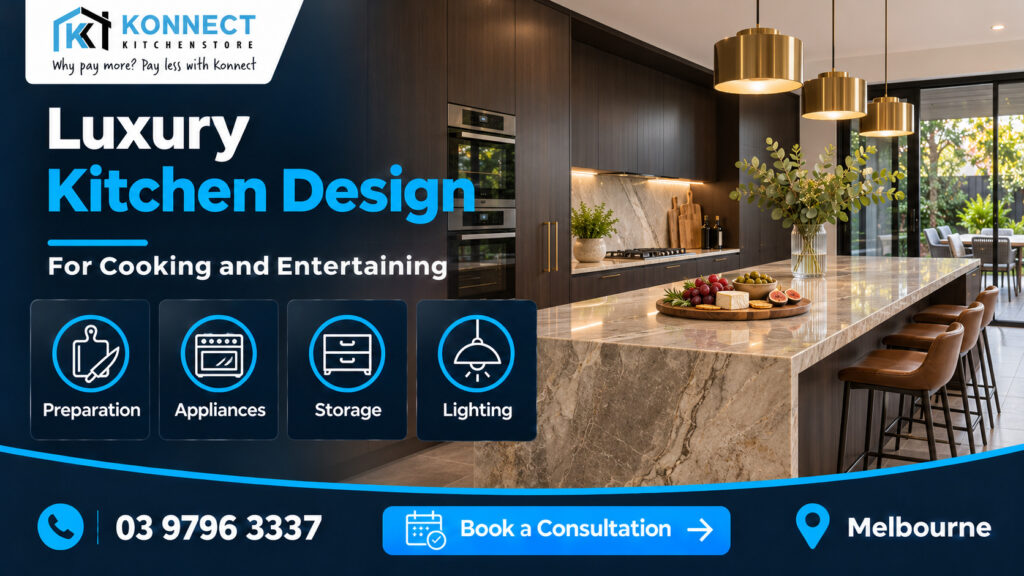
A premium-looking kitchen comes from a considered combination of materials, proportions and details. It does not require the most expensive option for every surface. For small budget kitchens in Melbourne, identify the appearance you want and direct the available budget towards the choices that create it.
When the project involves a wider redesign, a complete kitchen renovation also needs to address cabinetry, services and installation. Set aside the required work before deciding which decorative upgrades the remaining budget can support.
Choose one main feature
Decide what you want to notice first: an island colour, a distinctive splashback, a coordinated cabinet run or a particular benchtop finish.
A clear focal point can give the room direction. It also helps you assess whether an extra premium selection adds something useful or competes with what you already chose.
Compare the feature with simpler surrounding finishes. A kitchen can feel coherent when the supporting details are restrained, rather than asking every surface to stand out.
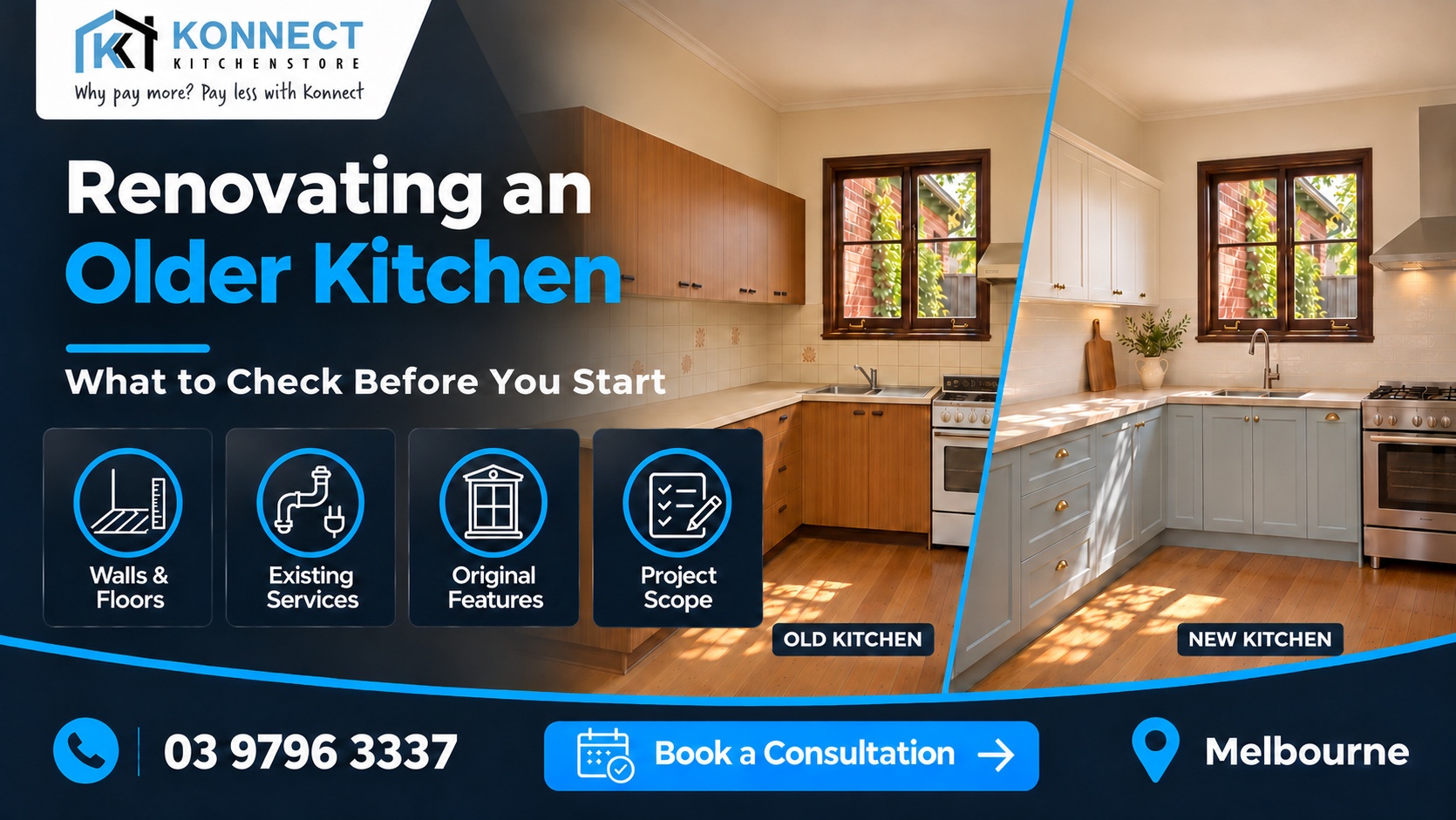
Assess the cabinetry you already have
Retaining sound, suitable cabinets can leave room in the budget for selected improvements. Check their structures and layout before planning new doors, finishes or hardware.
A surface update should suit the material and condition. New handles need compatible fixing positions, while replacement doors need accurate dimensions and appropriate hinges.
Do not spend on a premium appearance attached to cabinetry that cannot support the intended result. Where replacement is required, compare the full construction and installation specification as well as the visible fronts.
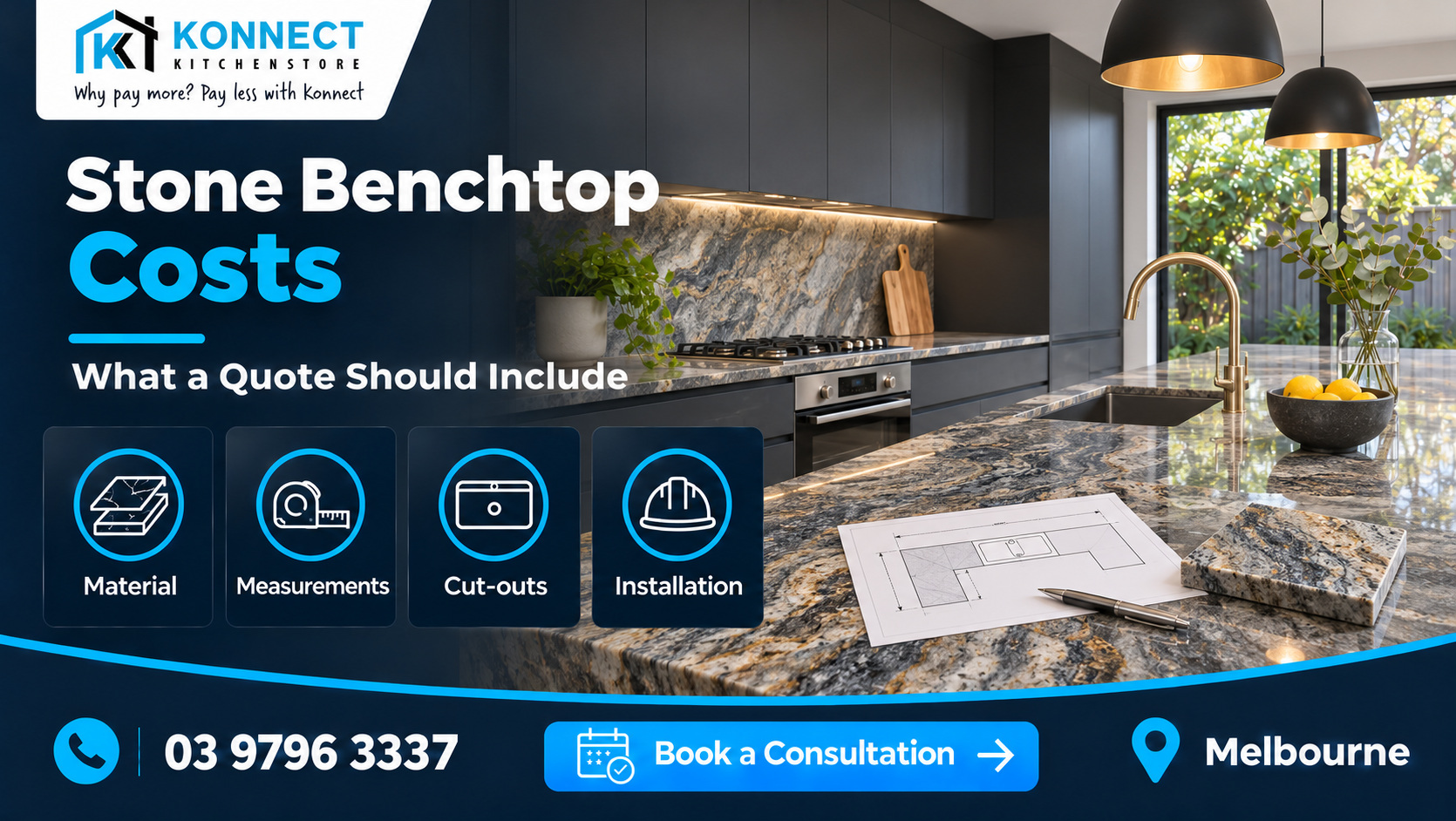
Compare benchtops by appearance and specification
A benchtop can have a strong visual role without needing the most elaborate edge, pattern or installation detail.
Compare samples at a useful scale and alongside the cabinet finish. Ask about care requirements, joins, cut-outs and the complete installed price.
Laminate benchtop options may suit a particular design and budget, while other materials may suit a different brief. Similar-looking surfaces do not necessarily have the same maintenance needs. Choose the exact product on its own merits.
Make colour and texture work together
A limited palette can give the room a deliberate appearance. Consider a principal cabinet colour, a work surface and one supporting texture or finish.
Navy, green or darker cabinetry can provide depth where you enjoy that look. Pale finishes or timber tones offer other directions. Compare the combination in the room’s actual light.
The aim is to choose a relationship between the surfaces. An attractive product selected alone may not work as well once it sits beside the flooring and other fixed finishes.
Use lighting to support the design
Task lighting helps the kitchen work; general and decorative lighting can support its overall appearance. Plan the layers together.
A pendant can be a feature when its size and location suit the room. It does not need to be the most costly fitting available, but it should be considered with the island or dining surface beneath it.
Discuss installation and controls with the relevant trade while the plan is being resolved. Adding lighting after completed cabinetry or splashbacks may affect the work involved.
Refine the details you touch
Handles, tapware and internal hardware contribute to the experience of the kitchen as well as its appearance.
Try the proposed items where possible. Check grip, cleaning and compatibility before choosing solely from a photograph.
Compare related visible finishes together:
- Cabinet handles and nearby tapware.
- Appliance finishes and the selected cabinet colour.
- Decorative lighting and any other prominent metal detail.
- Exposed edges, joins and the way materials meet.
The finishes do not all have to match exactly. A deliberate combination is more useful than a collection of unrelated upgrades.
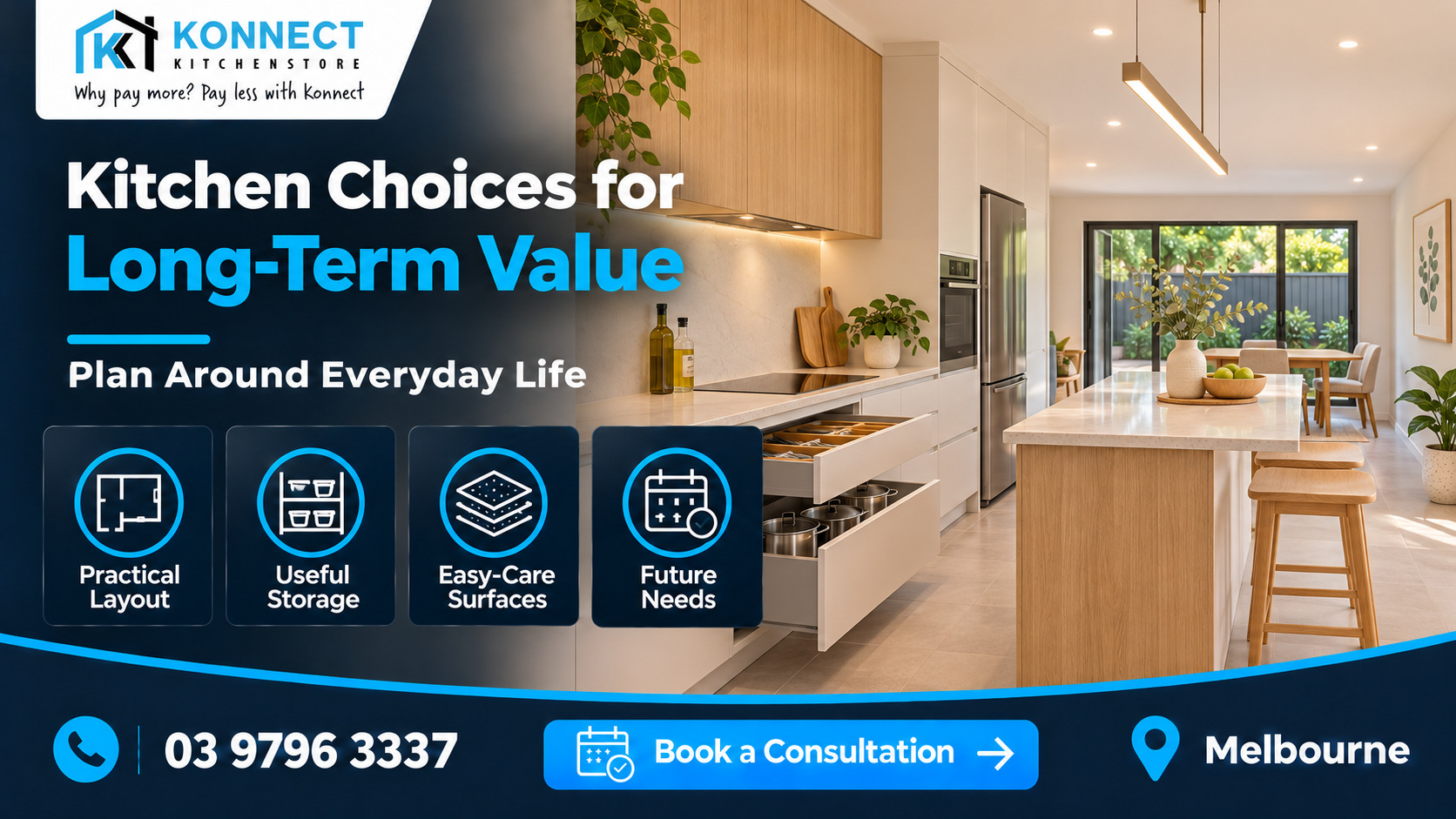
Keep the clear bench practical
An uncluttered surface can help the finish remain visible, but it needs suitable storage behind it. Plan where everyday appliances, cookware and food will go.
Choose internal fittings for the items they will hold. Keep regularly used belongings accessible so the design remains comfortable after the initial styling has been put away.
Full appliance integration is optional and requires compatible models. A coordinated visible appliance can suit the room without the cost and cabinetry implications of concealing everything.
Review the whole option before ordering
Compare the preferred design against the installed budget, including removal, required trade work and the products you will supply separately.
If the total needs to come down, identify which change preserves the main visual idea. A simpler supporting surface may be more appropriate than cutting necessary preparation or installation work.
The result should be a kitchen whose details feel connected and whose daily use remains practical. A luxury label by itself does not establish product quality or value.
Frequently Asked Questions
What can make a kitchen look more luxurious on a limited budget?
A coordinated palette, well-proportioned details, suitable lighting and a clear focal point can create a considered appearance. Start with the condition and arrangement of the kitchen, then compare selected upgrades. The result depends on how the choices work together, rather than their price labels alone.
Are expensive appliances necessary for a premium kitchen finish?
No. Choose appliances that meet your needs and fit the plan, then consider how their visible finishes relate to the cabinetry. Full integration is another option, but it requires suitable models and installation. Higher appliance spending does not automatically create a more coherent room.
Can laminate benchtops suit a refined kitchen design?
Yes, when the selected finish, edge detail and installation suit the room. Compare samples with the cabinetry and check care requirements for the exact product. A laminate surface should be judged as its own material, rather than assumed to perform identically to the stone or timber it resembles.
Should I spend more on the island than the rest of the kitchen?
Only when the island is the main feature and the additional specification provides something you value. Compare that choice against necessary work elsewhere. The island should still fit comfortably and serve a clear purpose before it receives a larger share of the decorative budget.
Can changing handles and lighting improve the finish without replacing everything?
They can make a useful visual change when the existing cabinetry and layout remain suitable. Check fixing compatibility, the condition of retained surfaces and the scope of lighting work. A limited update works best when the new details relate to what will stay.
How do I avoid spending on too many premium features?
Choose the main visual idea first and assess each optional extra against it. Compare complete installed options before ordering, including necessary trade work. If an upgrade adds little to the appearance or use you want, consider a simpler specification for that part of the room.
Bring a finish shortlist and a spending limit
Choose your preferred feature, gather a few material samples or photographs and set out the budget available for the whole project. Konnect Kitchen Store’s Hallam team can discuss which combinations deserve closer comparison. Contact us with your finished shortlist, or call 03 9796 3337.