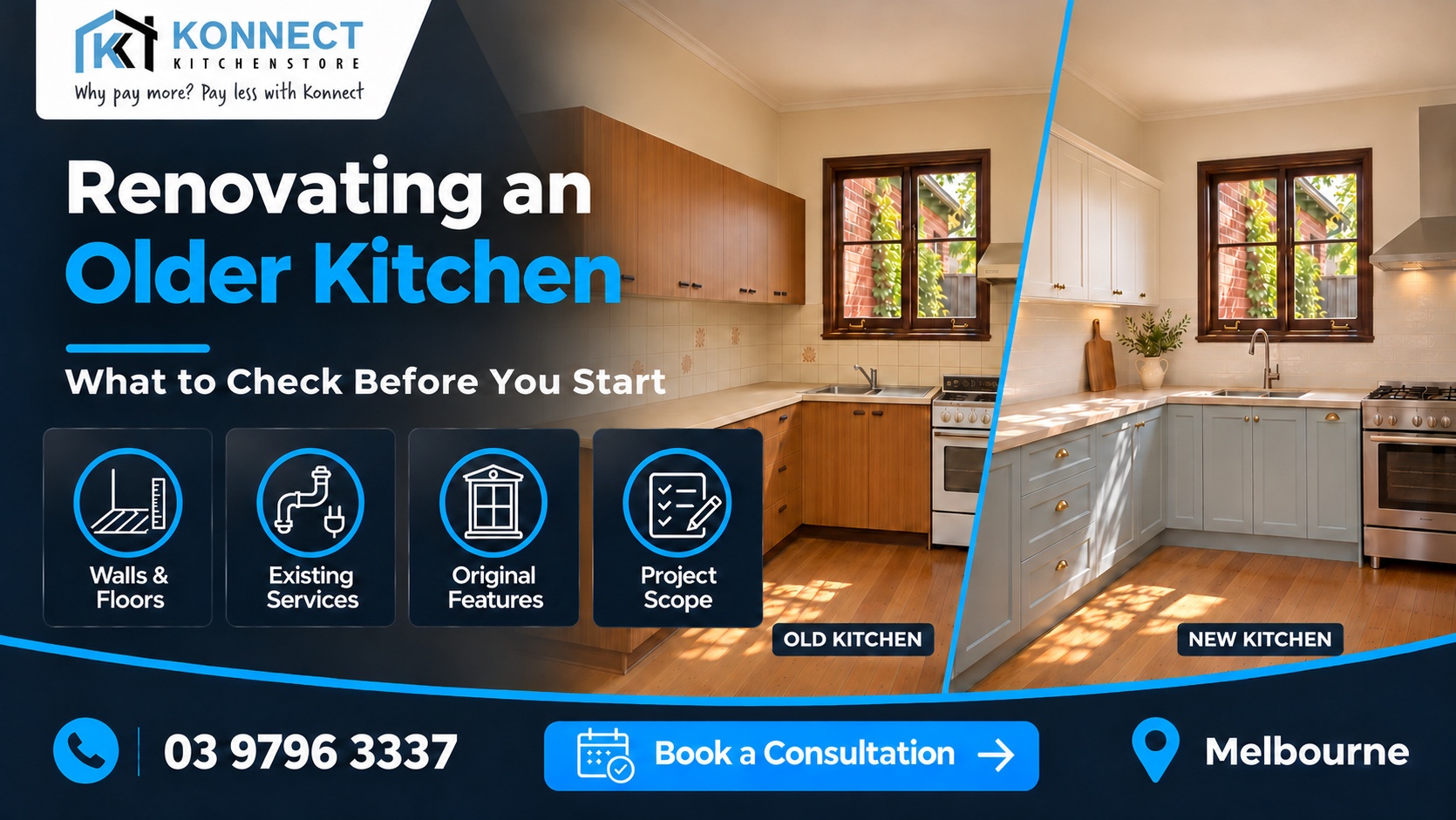

Choosing a kitchen designer is a decision about how well someone can turn your needs into a workable plan. If the designer is part of a complete kitchen renovation service, compare the thinking behind the design, the scope of the service and the way important decisions will be recorded.
A portfolio can show a preferred style, but it cannot tell you everything about the process. The most useful first conversation explains how your room, spending range and daily routine will shape the proposed kitchen.
Look for relevant projects, not just attractive photos
A designer who shows an impressive large kitchen may still need to explain how they would approach your apartment or compact townhouse. Look for examples with constraints similar to your own.
Ask what problem the original room presented and how the design addressed it. Better storage, clearer movement or fitting appliances into an awkward footprint can reveal more than the finish alone.
Useful points to compare include:
- Kitchens with a similar size or room shape
- Examples of the style you prefer
- Solutions for difficult storage or appliance positions
- How the new kitchen connects with adjoining rooms
- The reasoning behind the main changes
You are looking for an approach that can respond to your home, rather than a design to repeat unchanged.
Clarify what the design service includes
The word “design” can cover different levels of work. Before comparing prices, establish what you will receive and how the design connects with supply and installation.
Questions worth asking are:
- Will the room be measured on site?
- Which drawings and product specifications will be provided?
- How are layout changes and revisions handled?
- Are cabinetry, surfaces and appliances considered together?
- Who confirms that the selected products suit the final plan?
- Which parts of the project need separate arrangements?
Do not assume that a visual presentation includes every technical or installation detail. Ask what is included at each stage.
Discuss the budget before detailed selections
A spending range gives the designer a practical boundary. Explain whether it is intended to cover the whole project or only cabinetry and products.
If you are comparing budget kitchens in Melbourne, ask how the designer prioritises useful storage and finishes within a limited scope. A portfolio of premium kitchens does not show how someone would handle that brief.
Be clear about what you would like to retain. Suitable appliances, a workable footprint or sound components may influence the proposed solution.
Notice the questions you are asked
A useful design discussion goes beyond colour and door style. The designer should understand how the kitchen will be used.
Topics may include the number of regular cooks, the appliances you use, what is difficult to reach and whether people pass through the room while meals are prepared.
It is also reasonable to discuss future needs. A change in household size or mobility can affect decisions about storage and movement. You should have room to explain those requirements without being rushed towards a product selection.
Test how clearly the design is explained
You do not need to understand every drawing convention to take part in the process. You should be able to understand why the main decisions are being proposed.
Ask the designer to explain:
- Why a cabinet or appliance is in a particular position
- What is gained or lost by changing the footprint
- How doors and drawers work when open
- Where daily-use items will be stored
- Which features add cost and what benefit they provide
A clear explanation helps you compare options and approve the plan with greater confidence.
Ask who manages the next steps
Design, cabinetry production, installation and other trade work may involve different people. Establish who is responsible for communication and how handovers between stages are managed.
The kitchen renovation timeline should distinguish decisions made before production from work carried out on site. Ask when appliance details and material selections need to be final.
If you will coordinate some tasks yourself, make sure those responsibilities are understood before work begins.
Check how fees and changes are handled
Ask whether consultation or design fees apply and what they cover. If any fee may be credited or refunded, confirm the conditions rather than assuming every consultation is free.
The same care applies to revisions. Find out which changes are included during design development and how changes after approval would be assessed.
A written record of the agreed layout, selections and scope gives everyone something clear to work from.
Prepare a useful first brief
A first meeting is more productive when you can describe the current room. Bring:
- Photos from several angles
- A rough floor plan or available measurements
- Your main frustrations with the existing kitchen
- Details of appliances you intend to keep
- A spending range and preferred timing
- A few images showing specific details you like
You do not need a finished design. Separate the details you definitely need from ideas you are open to changing.
What should the outcome of the first discussion be?
You should understand the likely next step, what information is still needed and how the proposed service fits your project. You may not have a final design or fixed price at that stage.
If anything remains unclear, ask before proceeding. A useful relationship gives you a way to make decisions and understand their consequences throughout the work.
Frequently Asked Questions
What should I ask a kitchen designer before appointing them?
Ask what drawings and selections are included, how the budget will be checked, how revisions are charged and who manages the work after design approval. Request examples relevant to your type of room. A useful answer explains the responsibilities and deliverables rather than relying only on finished photographs.
Does a kitchen designer also organise installation?
Some providers coordinate design and installation; others supply drawings or cabinetry only. Confirm who is responsible for site measurement, orders, removal, trade bookings and handover. Record those responsibilities in the agreed scope so you know who to contact when a decision affects more than one part of the project.
What should I bring to a kitchen design consultation?
Bring room photographs, any available plans, appliance details and a realistic budget range. List the storage and layout problems you want to solve, plus anything you intend to keep. A few reference images are helpful when you can explain which feature you like and why.
How many kitchen design revisions should be included in the fee?
There is no single revision allowance that applies to every design service. Ask how many changes are included, what counts as a revision and how extra work is charged. Confirm the process before detailed design begins, especially if you expect to compare several layouts or change major selections.
Should a kitchen designer measure the room before the design is finalised?
The final design needs reliable site dimensions and relevant details about walls, openings and services. An initial discussion may use your plans or photographs, but confirm who will verify measurements before cabinetry is approved for production. Ask how any difference between supplied plans and the actual room will be handled.
How can I judge whether a kitchen designer’s previous work is relevant?
Look for projects with similar room constraints, storage needs or household routines, then ask how the design addressed them. Photographs show the finished appearance but may not explain the decisions behind it. A designer should be able to discuss the layout, trade-offs and agreed scope in a relevant example.
Make the first conversation about your room
Bring your brief and questions to Konnect Kitchen Store’s Hallam showroom. The team can discuss your layout, cabinetry needs and preferred level of project support before you commit to detailed selections. Contact us or call 03 9796 3337 to discuss the help you need with planning.