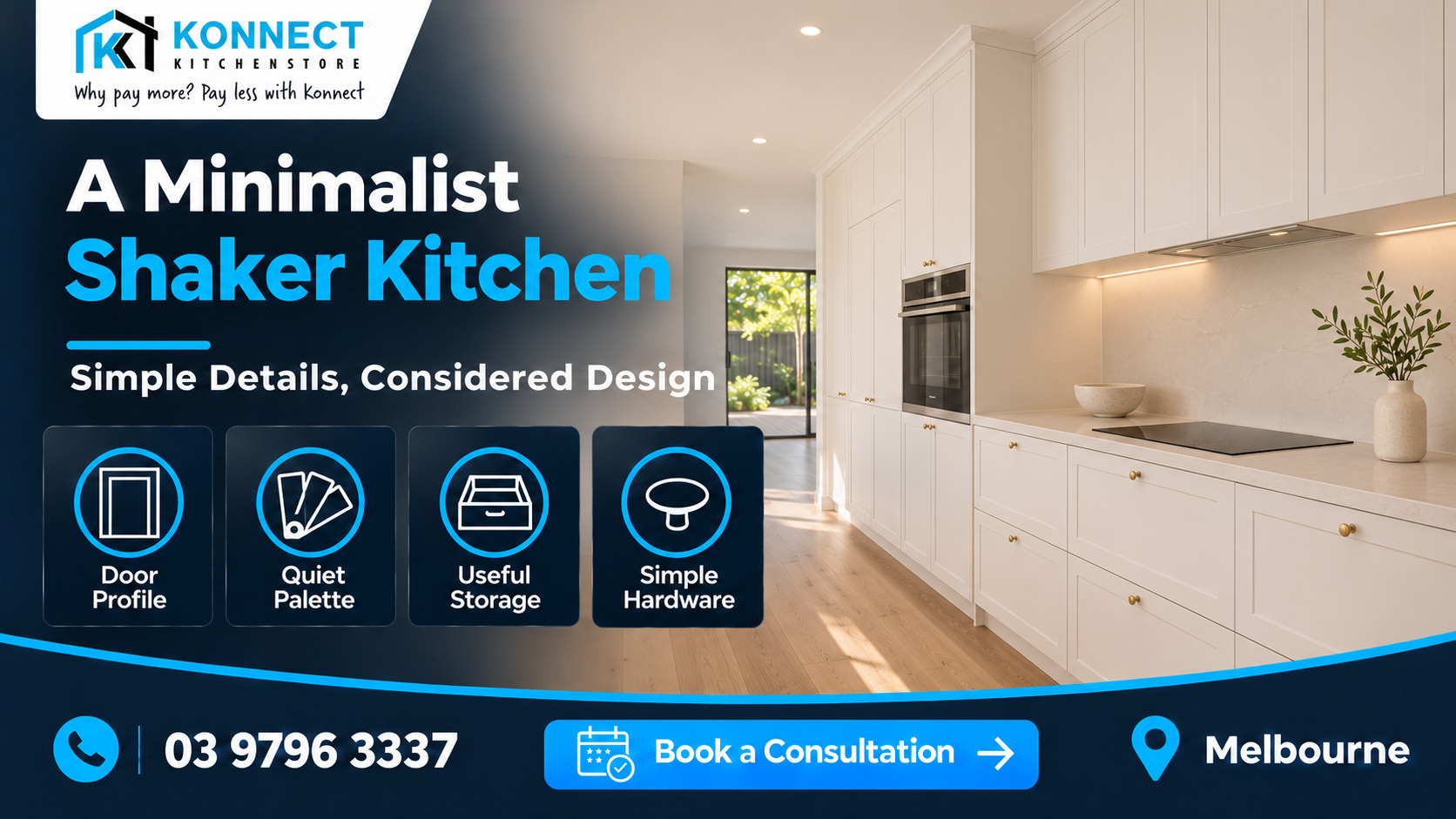
A minimalist Shaker kitchen combines a restrained framed-door detail with an uncluttered overall scheme. For a Melbourne kitchen renovation, the useful starting point is to decide how much profile, colour and texture you want the cabinetry to contribute.
You can enjoy the character of a Shaker-inspired door while keeping the rest of the room quiet. The result depends on the whole combination: cabinet proportions, handles, surfaces and storage. A minimalist appearance also needs a practical home for the items used every day.
Begin with a restrained door profile
Look at the width and depth of the frame, not just the name on a sample. A narrow, simple profile creates a different effect from a broader or more detailed door.
View the profile across a run of cupboards and drawers. Repeated frames can create considerable visual detail even when each door looks simple on its own.
Check the construction and available finishes separately. Shaker styling does not require every door to be solid timber. If you are still deciding between profiles, the Shaker and flat-panel comparison helps explain the difference in appearance and specification.
Give the palette a small number of clear roles
Choose the principal cabinet colour first, then compare it with the benchtop, splashback and flooring.
A pale neutral can provide a quiet background, while a muted green, blue or deeper tone may suit another room. A minimalist direction does not require an entirely white kitchen.
If you add a second cabinet finish, give it a specific location. A contrasting island or selected timber-look section can be easier to coordinate than several changes scattered across the room.
Compare actual samples under the light used in your home. Names such as warm white or soft grey do not show precisely how two products will look beside one another.
Let texture support the framed detail
Timber tones, a gently varied benchtop or a simple tiled splashback can bring warmth. The framed doors already create lines, so assess how much additional pattern the room needs.
For example, you might pair a quieter work surface with a timber-toned accent rather than combining prominent grain, strongly patterned stone and decorative tiles throughout.
The question is whether each surface supports the same direction. You do not need to remove all texture to achieve a restrained kitchen, but each addition should have a clear visual role.
Check care requirements alongside appearance so the selected surfaces suit your everyday use.
Select handles for appearance and grip
A simple knob, pull or other compatible opening detail can work with a Shaker-inspired front. Try it on a sample where possible.
Check where the handle sits within the profile and how its size relates to the door or drawer. Larger drawers may need a different proportion from a small wall cabinet.
Keep the wider hardware selection considered:
- Compare handles with the nearby tapware.
- Check the grip with the way you naturally open a door.
- Confirm clearance beside walls and appliances.
- Look at the repeated pattern across the full cabinet run.
A restrained metal finish can provide enough contrast without adding several decorative details.
Use storage to keep the look achievable
A clear benchtop is easier to maintain when everyday items have accessible storage. Start with what you actually use rather than planning a kitchen that only looks tidy when appliances are removed from the room.
Group belongings around their tasks and choose internal fittings to suit. An occasional display shelf can work, but keep enough closed storage for the less decorative contents.
Consider what happens during cooking too. A preparation surface needs space for ingredients and tools, not only a clear appearance between meals.
Keep lighting and surrounding details coordinated
Task lighting should serve the working surfaces, while general lighting supports the room. Decorative fittings can add a limited feature where the layout allows it.
Compare the scale of pendants, shelving and visible brackets with the cabinet detail. Several competing features can make an otherwise restrained scheme feel busy.
Discuss lighting positions with the relevant trade during planning. Resolve the practical installation before the cabinet and splashback details are finalised.
Review a whole elevation before ordering
Look at the arrangement from the main entrance and adjoining living area. Check tall units, visible end panels and how the cabinet run meets the ceiling or a nearby opening.
Remove a feature if it adds detail without improving the appearance or use you want. That may mean fewer display sections, one simpler surface or a more consistent handle choice.
A minimalist Shaker kitchen remains personal. Its restraint comes from making the selections work together rather than following a fixed list of compulsory colours or materials.
Frequently Asked Questions
Can a Shaker kitchen be minimalist?
Yes. Choose a restrained profile and coordinate the surrounding surfaces, handles and lighting. Keep storage practical so the uncluttered appearance can be maintained during ordinary use. The framed door detail can remain the main decorative element in the room.
What cabinet colours suit a minimalist Shaker kitchen?
Pale neutrals, muted colours and deeper tones can all work when coordinated with the room. Compare samples with the flooring, work surfaces and light. A small, considered palette is more useful than choosing a colour solely because it appears in a particular style photograph.
Do minimalist Shaker kitchens need wooden knobs?
No. Wooden knobs are one option, while suitable metal pulls or other compatible details can provide a different interpretation. Consider grip, scale and the way the fitting sits within the door profile. Choose a consistent detail that suits the room.
Can I include timber without making the kitchen feel rustic?
Yes. A selected timber or timber-look section can add warmth beside simpler finishes. Assess the grain, colour and amount used. The overall effect depends on the surrounding cabinet profile, work surface and hardware rather than on timber alone.
Should I use open shelving in a minimalist Shaker kitchen?
Only where it provides useful storage or a display area you want to maintain. Too much open shelving can expose more visual detail than intended. Compare the appearance with the closed storage you would lose and the items that need somewhere practical to go.
Is a Shaker kitchen automatically easy to maintain?
No. Care depends on the exact material, finish, hardware and use. Profile edges need cleaning alongside the flat surfaces. Request the manufacturer's instructions for the selected doors instead of assuming the style name guarantees low maintenance.
Build the palette around one door
Choose the Shaker profile you prefer, then bring the flooring details and a few finish references to Konnect Kitchen Store's Hallam team. The discussion can focus on which supporting choices keep the scheme restrained. Contact us about your minimalist Shaker palette, or call 03 9796 3337.